


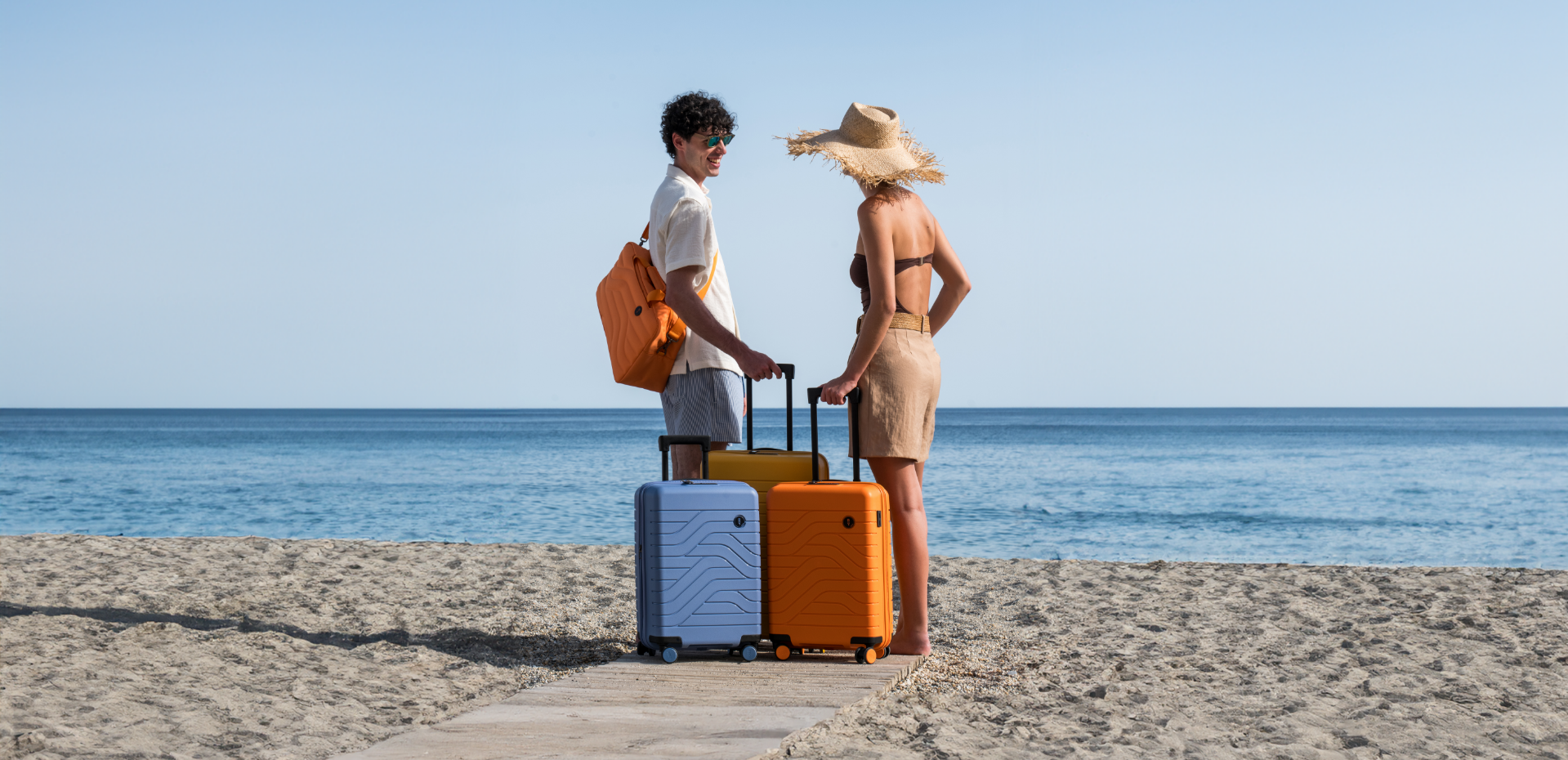
How to Choose Lightweight Luggage for Summer
Summer travel rewards those who pack smart. Between crowded terminals, tighter airline weight allowances, and itineraries that move from city to coast, every pound your suitcase weighs before you pack it is a pound working against you. That is why lightweight luggage has become the defining choice for experienced travelers: it preserves your full packing allowance, moves effortlessly through airports and cobblestone streets alike, and spares your shoulders on the way.
This guide explains what actually qualifies as lightweight, why it matters most during peak season, and which features separate a truly refined lightweight suitcase from one that simply cuts corners. Along the way, you will see how Bric's Italian-designed collections deliver mobility and sophistication without sacrificing capacity.
What Counts as Lightweight Luggage
There is no single industry standard, but experienced travelers and luggage designers work from consistent benchmarks:
- Carry-on suitcases: under 7 pounds empty is genuinely lightweight; under 5 pounds is exceptional
- Medium checked suitcases: under 9 pounds empty
- Large checked suitcases: under 11 pounds empty
The most common misconception is that lightweight means fragile. Early ultralight designs earned that reputation by thinning out materials until frames flexed and zippers failed. Modern engineering has closed that gap. High-grade recycled polycarbonate shells, dense woven nylons, and refined aluminum trolley systems now achieve low weight through better materials rather than less material. The best lightweight luggage feels solid in hand, holds its shape under load, and still comes in pounds under traditional designs.
The second misconception is that low weight requires giving up structure and organization. A well-designed lightweight suitcase keeps its internal compression systems, garment panels, and lined interiors; it simply builds them from smarter materials.
Benefits of Traveling with Lightweight Luggage
Easier Airport Navigation
Summer terminals are crowded, connections are tight, and gates are rarely close together. A light suitcase changes how you move: it lifts into overhead bins in one motion, glides through security lines, and follows you up escalators and across transit platforms without protest. Travelers who choose lightweight carry on luggage consistently report smoother boarding simply because they are not wrestling their bag at any point in the journey.
More Packing Flexibility
Airline allowances are fixed; your suitcase's share of that allowance is not. If a checked bag limit is 50 pounds and your empty suitcase weighs 12, you pack 38. If it weighs 9, you pack 41. Over a two-week summer itinerary, those extra pounds are an additional pair of shoes, a second swimsuit, or the room to bring something home.
Reduced Travel Fatigue
The physical cost of heavy luggage compounds across a trip: lifting into car trunks, carrying up hotel stairs, rolling across uneven pavement in coastal towns. A lighter bag reduces strain on shoulders, wrists, and back, which matters most on multi-stop summer itineraries where you handle your luggage daily.
Airline Weight Considerations
Weight limits are stricter than many travelers realize, particularly abroad. While most US carriers focus on carry-on dimensions, many international and regional airlines enforce carry-on weight caps as low as 15 to 18 pounds. A suitcase that weighs 4 pounds empty instead of 8 effectively doubles what you can bring aboard those flights. For anyone researching the best carry on luggage for international travel, empty weight belongs at the top of the checklist.
What to Look for in Lightweight Luggage
Material Selection
Materials determine the weight-to-durability equation. Recycled polycarbonate offers impact resistance at a fraction of the weight of older hard shells, and premium nylon and woven fabrics deliver softside flexibility with real abrasion resistance. Bric's builds across both: hardside luggage for protection and polish, and softside luggage for flexibility and give in tight trunks and overhead bins.
Spinner Wheels
Four double-spinner wheels let the suitcase carry its own weight while you guide it, rather than dragging a tilted roller bag behind you. Look for smooth, multi-directional wheels that track straight on polished floors and stay controlled on pavement. Bric's spinner suitcases pair this maneuverability with low empty weights, which is precisely the combination that makes a bag feel effortless.
Expandability
Summer trips rarely end with the suitcase you departed with. Expandable luggage adds usable capacity through a zippered gusset when you need it and stays streamlined when you do not, all with negligible added weight.
Organization Features
Interior architecture is where premium lightweight design shows. Compression straps, zippered dividers, and lined interiors keep packing dense and orderly, which means you can travel with a small suitcase with wheels and still arrive with everything pressed and in place. Thoughtful organization lets a smaller, lighter bag do the work of a larger one.
Durability
Weight savings mean nothing if the bag lasts two seasons. Examine the trolley handle (it should extend and lock without wobble), the zippers (large, smooth, and reinforced), and the warranty behind them. Bric's builds luggage as a long-term travel companion, which is the standard any lightweight suitcase should meet.

Best Lightweight Carry-On Luggage for Summer Travel
Bric's approaches lightweight design from three distinct directions, each suited to a different kind of traveler.

Bric's Taormina Carry-On
Taormina is Bric's lightest collection, with carry-on models starting at approximately 4 pounds empty. That figure places it among the lightest carry on luggage available anywhere, and it achieves the number without stripping away structure: spinner wheels, organized interior, and Bric's refined Italian design language are all intact. For weight-capped international itineraries and travelers who count every pound, Taormina is the natural starting point.
Bellagio Carry-On
Bellagio is Bric's most iconic silhouette: a hardshell built from recycled polycarbonate with signature leather trim. It brings hardside protection and timeless styling at a weight that remains firmly travel-friendly, and its screen appearances have made it one of the most recognizable pieces of luggage in the world. For travelers who want their small carry on luggage to be as elegant as it is practical, Bellagio delivers.


X-Collection Softside Option
The X-Collection takes the softside route: durable recycled fabric, a versatile urban-ready design, and seasonal colors refreshed twice a year. Soft construction keeps weight low and adds forgiving flexibility, sliding into crowded overhead bins and tight rental car trunks where rigid shells need coaxing. It suits younger and multi-modal travelers moving between planes, trains, and city streets.
Best Lightweight Checked Luggage
The same principles scale up. For week-plus summer trips, Bric's checked luggage lineup carries the lightweight philosophy into medium and large spinners:
- Medium spinners (27 to 30 inches) suit one to two week trips and stay comfortably inside airline weight allowances even when packed full.
- Large spinners (30 to 32 inches) maximize capacity for families and extended stays; here, a low empty weight matters most, because large bags are the first to brush against the 50-pound line.
Taormina's checked sizes extend its featherweight advantage to full-size capacity, Bellagio's polycarbonate spinners protect tailoring and valuables on long hauls, and X-Collection's soft trolleys flex around irregular loads. Whichever direction you choose, verify the empty weight in the specifications before buying; it is the one number that follows you through every airport scale.
Lightweight Luggage vs Traditional Luggage
Traditional luggage earned its weight through heavy frames, thick shells, and hardware chosen before modern materials existed. Contemporary lightweight design replaces that mass with engineering, and for most travelers the trade reads clearly in favor of lighter builds:
- Weight allowance: lightweight bags return 3 to 8 pounds of packing capacity per bag
- Handling: lighter bags are easier to lift, stack, and maneuver in every setting
- Durability: premium lightweight materials now match or exceed older heavy shells
- Structure: modern lightweight cases hold their shape and protect contents reliably
The honest considerations: ultra-budget lightweight bags (a different category from premium builds) can sacrifice frame rigidity, and travelers who routinely transport fragile or high-value items may still prefer the most protective hardshell available regardless of weight. Premium lightweight design exists precisely to make that compromise unnecessary.

How to Pack Light for Summer Travel
The lightest suitcase still needs a disciplined packing strategy behind it:
- Build around one color palette. Summer wardrobes in two or three coordinating colors let every piece pair with every other, cutting total items by a third.
- Choose fabrics that work in your favor. Linen, lightweight cotton, and technical knits pack small, dry fast, and shrug off wrinkles.
- Use packing cubes and compression. Structured packing organizers compress clothing, keep categories separated, and make repacking mid-trip a five-minute task.
- Follow the 1-2-3 rule for a week away. One jacket or layer, two pairs of shoes beyond the ones you wear, three bottoms that all match your tops.
- Decant toiletries. Full-size bottles are the heaviest, least necessary items in most suitcases. Travel sizes reclaim both pounds and space.
- Leave 20 percent empty. Departure-day fullness becomes return-day overflow. Space you do not fill going out is capacity for what you bring back.
A carry-on sized at the standard 22 x 14 x 9 carry-on luggage dimensions, packed with this discipline, comfortably covers a one-week summer itinerary. Travelers who want maximum cabin capacity can look at the largest carry-on luggage their preferred airline permits, but disciplined packing usually matters more than the extra inch.
Final Thoughts
Choosing lightweight luggage comes down to three decisions made in order: confirm the empty weight against the benchmarks above, choose the shell construction that fits how you travel, and verify the details (wheels, handle, interior, warranty) that determine how the bag performs years from now. Get those right and summer travel becomes what it should be: lighter, smoother, and considerably more elegant.
Bric's carries that philosophy across every format, from carry-on luggage built for weight-capped cabins to full-size spinners for the long summer holiday. For travelers assembling a complete set, coordinated travel sets pair carry-on and checked sizes in matching finishes, and Bric's travel bags round out the collection for weekends and day trips.
Explore the full range of lightweight luggage at Bric's and travel this summer with everything you need, minus the weight you do not.
FAQ
Q: What weight is considered lightweight for a carry-on suitcase?
A: A carry-on under 7 pounds empty is generally considered lightweight, and models under 5 pounds are among the lightest available. Bric's Taormina collection starts at approximately 4 pounds, which preserves nearly all of a strict airline weight allowance for your belongings.
Q: Is lightweight luggage durable enough for checked baggage?
A: Yes, when it is built from premium materials. Modern recycled polycarbonate shells and high-density woven fabrics achieve low weight through material engineering rather than thinner construction. Check the trolley system, zippers, and warranty; those reveal build quality faster than weight alone.
Q: What is the lightest type of luggage construction?
A: Softside construction using technical woven fabrics is typically the lightest, followed closely by modern polycarbonate hardshells. Aluminum cases are the heaviest category. Softside designs also add flexibility, which helps when fitting a bag into crowded overhead bins.
Q: Does a small suitcase with wheels count as a carry-on?
A: It depends on dimensions rather than the name. Most US airlines allow bags up to 22 x 14 x 9 inches including wheels and handles, while many international carriers run slightly smaller. Always check your specific airline, and remember that some also enforce carry-on weight limits.
Q: Why does lightweight luggage matter more in summer?
A: Summer is peak travel season: fuller flights mean more competition for overhead space, stricter gate-side enforcement of size and weight rules, and more connections where you handle your own bags. Lighter luggage moves faster through all of it and leaves more of your allowance for longer warm-weather itineraries.